Serving Greater New Orleans & Northshore



Whole-Home Dehumidifier vs “Lower the Thermostat” for New Orleans Humidity
Whole-Home Dehumidifier vs “Lower the Thermostat” for New Orleans Humidity

When summer takes hold in New Orleans, the air outside feels thick enough to drink. Between Lake Pontchartrain, the Mississippi River, and our tropical Gulf air, relative humidity across Metairie, Kenner, Gretna, and the West Bank routinely climbs past 80% to 90%.
Step inside your home, and you expect a crisp, refreshing haven. Instead, many NOLA homeowners face a common frustration: the air feels sticky, bedsheets feel slightly damp, and your skin feels clammy even when the thermostat reads 72°F.
The instinct for most people is simple: crank the thermostat down to 68°F. But cranking down your air conditioner to fight moisture is an expensive, inefficient battle that damages your HVAC equipment.
Stuart Services has been keeping New Orleans homes cool, dry, and comfortable since 1956. This practical guide breaks down why lowering your thermostat fails to control Crescent City humidity, how central air conditioners handle moisture, and why a whole-home dehumidifier is the ultimate solution for year-round indoor comfort.
Temperature vs. Relative Humidity: Why “Cold” Doesn’t Mean “Comfortable”
To understand why lowering your thermostat fails to make your home comfortable, it helps to look at how the human body perceives temperature.
Your body cools itself through sweat evaporation. When indoor air is dry (between 40% and 50% relative humidity), sweat evaporates quickly, leaving you feeling cool and refreshed.
However, when indoor relative humidity rises above 55% to 60%, the air is saturated with water vapor. Evaporation slows down, trapping heat against your skin. A home at 76°F with 45% humidity feels far cooler and more comfortable than a home at 70°F with 68% humidity, and it costs a fraction of the price to maintain.
The “Lower the Thermostat” Strategy: Why It Backfires
An air conditioner is designed primarily to lower air temperature (sensible cooling). It removes moisture (latent cooling) as a secondary byproduct: warm, humid air passes over the icy evaporator coil, water condenses into liquid, and drains out of your home.
When you lower your thermostat to fight humidity, three major problems occur:
1. Astronomical Utility Bills
Energy bills during a South Louisiana summer are already high. Forcing your AC compressor to run non-stop to pull a house down to 68°F forces your system into its highest electrical draw window for hours on end, spiking your Entergy or Cleco bills.
2. Accelerated Equipment Wear and Short-Cycling
Running your air conditioner constantly causes excessive wear on blower motors, capacitors, and outdoor compressors. Furthermore, if your AC unit is even slightly oversized for your home, it cools the air temperature down rapidly and shuts off before it runs long enough to pull water vapor out of the air. This leaves cold, damp, clammy air trapped inside your living spaces.
3. Increased Risk of Frozen Evaporator Coils
Setting your thermostat too low during humid weather restricts airflow dynamics across the indoor evaporator coil. As moisture collects on the coil, it can freeze into a solid block of ice, blocking airflow entirely and causing major water damage when it melts into your drain pan.
Whole-Home Dehumidifiers: The Dedicated Moisture Solution
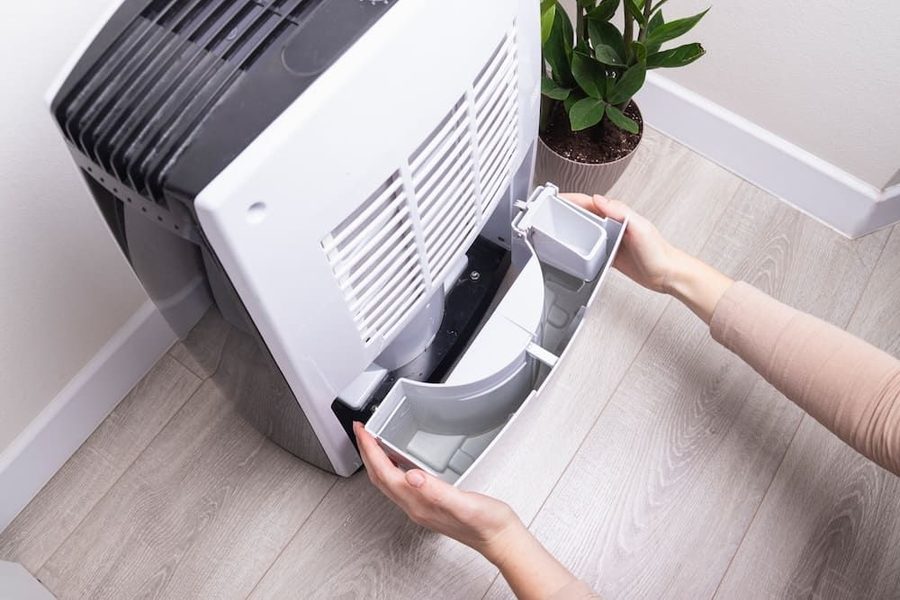
A whole-home dehumidifier works alongside your central HVAC system to manage moisture independently of temperature control. Installed directly into your ductwork or return plenum, it pulls humid air out of your living spaces, extracts up to 90+ pints of water per day, drains the moisture away, and returns dry, comfortable air back through your vents.
The Advantages of Whole-Home Dehumidification in New Orleans
-
Independent Operation: A dedicated dehumidifier operates based on a humidistat setpoint (targeting 45% to 50% relative humidity). It runs its low-draw fan to pull moisture out of your air even when your AC compressor is not actively cooling.
-
Save Money by Raising the Thermostat: Because dry air feels significantly cooler, you can comfortably set your thermostat to 75°F or 76°F without feeling sticky. Every degree you raise your thermostat saves up to 3% to 5% on your monthly cooling costs.
-
Stop Mold, Mildew, and Dust Mites: Mold spores and dust mites thrive in relative humidity above 60%. Keeping indoor humidity below 50% protects drywall, furnishings, and indoor air quality from toxic mold growth.
-
Protects Historic NOLA Architecture: Older New Orleans homes with original hardwood floors, plaster walls, and historic trim suffer severe warping and wood rot under high humidity. Whole-home moisture control preserves your building structure.
Restore Crisp, Dry Comfort to Your New Orleans Home
Putting up with clammy bedsheets, sticky air, and astronomical summer energy bills is an unnecessary tax on living in Crescent City. While lowering your thermostat seems like a quick fix, it wastes energy and places extreme mechanical strain on your air conditioner.
Investing in a whole-home dehumidification system is the most effective way to eliminate indoor moisture, lower your monthly utility expenses, and enjoy true, crisp comfort throughout every season.
Experience true dry comfort in your home. Contact Stuart Services today to schedule your indoor air quality service!
Recent Posts
How to Prepare Your New Orleans Home Before a Storm
New Orleans Hurricane Electrical Checklist
Sewer Smell in the House in New Orleans: The 6 Most Common Causes (And Which Ones Are Emergencies)
Send Us a Message
Send Us a Message



Get Started Today
Let Stuart Do It!
Let Stuart Do It!
Ready for reliable home service you can count on? Contact Stuart Services today to schedule fast, expert heating, cooling, plumbing, or electrical solutions backed by over 65 years of trusted experience.